What are the steps?
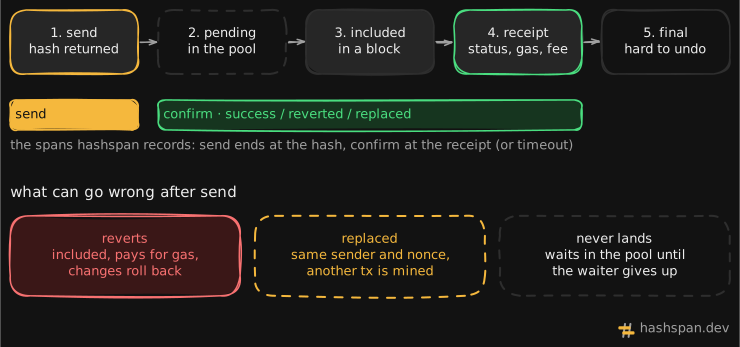
- Send. The client signs the transaction and sends it to a node. The node returns the hash. Nothing has executed yet.
- Pending. The transaction joins a pool of pending transactions and waits (ethereum.org).
- Included. A block producer puts it in a block. Now it runs and changes state, or reverts.
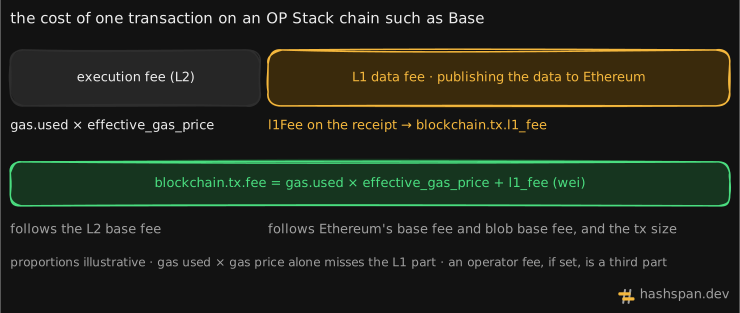
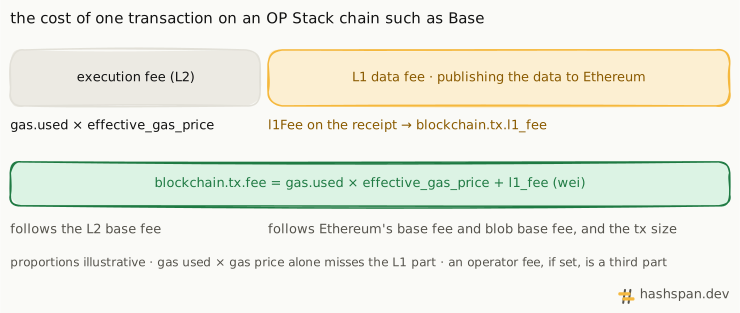
- Receipt. The block’s receipt records the outcome: status, gas used, effective gas price, logs.
- Final. Over time the block becomes harder and harder to undo.
The gap between step 1 and step 4 is where most surprises live.
What can go wrong after send?
- It reverts. It’s included and pays for its gas, but nothing it tried to change sticks.
- It’s replaced. Another transaction from the same sender with the same nonce is mined instead, for example a speed-up or a cancel. viem reports this as
replaced,repricedorcancelled(viem docs). - It never lands. It sits in the pool until whoever is waiting gives up.
Why does this matter for agents?
An agent’s tool usually returns at step 1, with a hash. The trace marks the tool call as fine and moves on. Steps 2 to 4 happen outside the trace. This post walks through a real example where the tool call looks fine and the transaction reverted.
pay_vendor · from make demodurations from the run; positions approximate
execute_tool pay_vendor26.3 ms26.3 ms
send 3133713.4 ms13.4 ms
confirm 3133711.8 ms11.8 ms