Transaction dropped and replaced: meaning and fix

Replaced in the pool. It had a hash, but another transaction with the same nonce was mined: no receipt for this hash.

4 min read· Updated

Short answer

Your transaction waited in the mempool, and another transaction from the same address with the same nonce was mined first. Only one transaction per sender and nonce can be mined, so yours never will be. Its fee was not paid. Look up the replacing transaction: if it was a speed-up or cancel you sent, nothing is wrong; if not, find what sent it and resend what you still need.

What you will see

Messages printed for it:

  • Dropped & Replaced
On this page

Where does it stop?

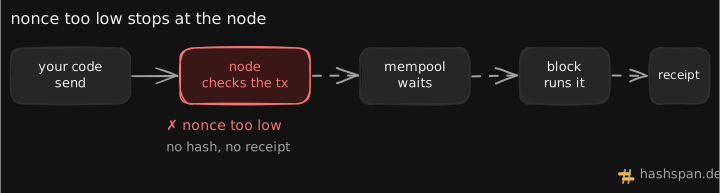
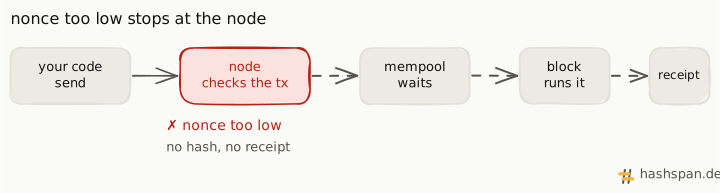
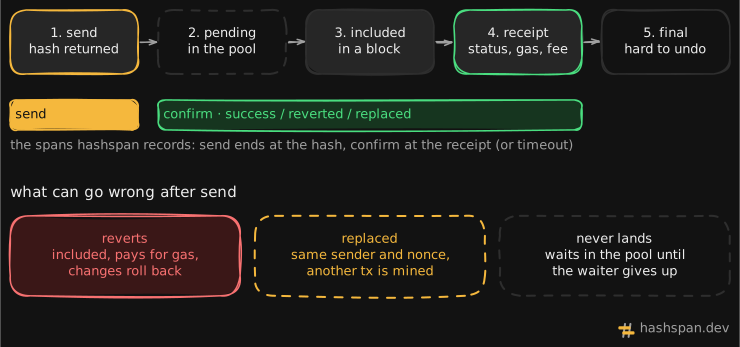
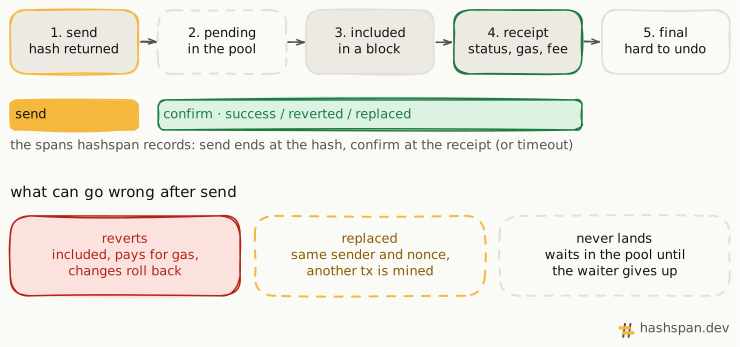
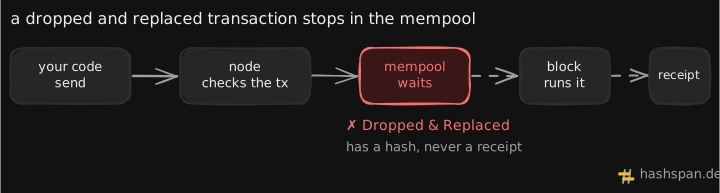
A transaction's path from your code to the node, the mempool, a block and a receipt. The mempool is marked in red with Dropped & Replaced: the transaction has a hash but never reaches a block or a receipt.A transaction's path from your code to the node, the mempool, a block and a receipt. The mempool is marked in red with Dropped & Replaced: the transaction has a hash but never reaches a block or a receipt.

The node accepted your transaction and gave you a hash. It waited in the mempool, and then another transaction took its place. It will never reach a block.

What happened to my transaction?

An account’s transactions are numbered by nonce, and each number can be used once. Two transactions with the same sender and nonce can wait at the same time, but only one of them can be mined.
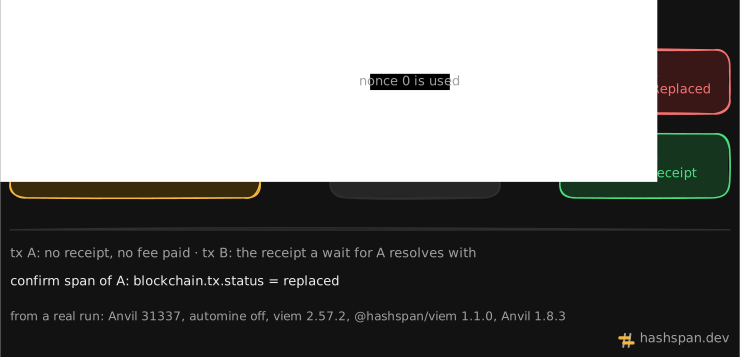
Transaction A with nonce 0 waits at a 2 gwei max fee. Transaction B with the same nonce, 0 ETH to the sender at 2.4 gwei, is mined in block 1 and succeeds. Transaction A is marked Dropped & Replaced: no receipt and no fee paid.Transaction A with nonce 0 waits at a 2 gwei max fee. Transaction B with the same nonce, 0 ETH to the sender at 2.4 gwei, is mined in block 1 and succeeds. Transaction A is marked Dropped & Replaced: no receipt and no fee paid.

On Etherscan the first one shows as “Dropped & Replaced”. Its gas fee is not charged, because it was never mined.

Who replaced it?

Open the replacing transaction: same sender, same nonce. What changed tells you why. viem uses the same three cases when it notices a replacement (onReplaced):

viem reason What changed Usually
repriced Only the fee A speed-up
cancelled Value is 0 A cancel
replaced Value or data A different transaction

repriced and cancelled are usually you or your wallet. replaced is the one to check: another process signed with the same key.

Why does it happen?

  • You sped it up or cancelled it in a wallet. This is the expected case.
  • A retry sent a new version with a higher fee while the first was still waiting.
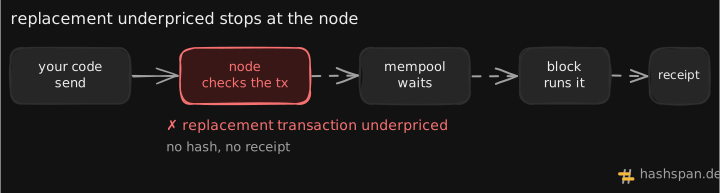
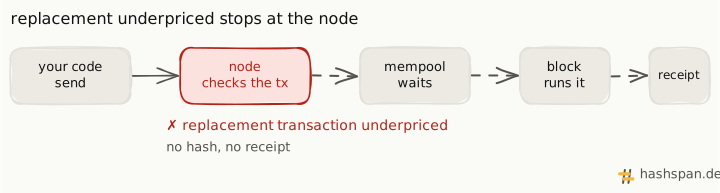
  • Two senders share one key. Two workers or two agents each pick the next nonce and send. The second one replaces the first if it pays enough more; otherwise the node refuses it with replacement transaction underpriced.

What should I do?

  1. Check the replacing transaction’s status. If it succeeded and it was your speed-up or cancel, you’re done.
  2. If you still need the original action, send it again with the next nonce. The old one can’t be revived.
  3. If you didn’t expect a replacement, find the second sender. Give each worker its own key, or let one place assign nonces.
  4. In code, handle the replacement instead of waiting forever:
import type { Hash, PublicClient } from 'viem';
declare const publicClient: PublicClient;
declare const hash: Hash; // the transaction you are waiting for
const receipt = await publicClient.waitForTransactionReceipt({
hash,
onReplaced: ({ reason, replacedTransaction, transaction }) => {
console.warn(`${replacedTransaction.hash} ${reason} by ${transaction.hash}`);
},
});
// in our run (wait started first): receipt.transactionHash was the replacing transaction's hash

In our run, when the wait had read the first transaction before the cancel arrived, it resolved with the receipt of the transaction that replaced it. Check receipt.transactionHash before you treat it as yours.

Why is my wait stuck after a replacement?

In our runs, viem spotted a replacement only when it had read your transaction before it was replaced. When the cancel went out right away, the wait never saw the original: it ran until viem’s default timeout of 180 seconds and threw WaitForTransactionReceiptTimeoutError. With the cancel sent 500 ms later, the same wait resolved with the cancel’s receipt.

So a wait that hangs after a speed-up or cancel may not be stuck on the chain. Look the nonce up instead: if getTransactionCount for the sender is past your nonce and your hash has no receipt, it was replaced. hashspan ends that confirm span with error status and error.type timeout.

What does it look like in a trace?

hashspan ends the confirm span of the waited-for hash as replaced, with the hash that took its place. The receipt goes on the replacing transaction’s own confirm span:

confirm 31337 · the original transaction
blockchain.tx.status
replaced
blockchain.tx.replacement.hash
the hash of the replacing transaction
From the run above. The replacing transaction's own confirm span has blockchain.tx.status success and the block.

So the fee and the status are never put on the wrong hash. How a receipt is attributed is in the transaction lifecycle.
How this page was checked. Reproduced on a local Anvil chain (31337) with automine off, Anvil 1.8.3, viem 2.57.2 and @hashspan/viem 1.1.0 on 2026-10-18: a transfer at a 2 gwei max fee, then a 0-value transaction to the same sender with the same nonce at 2.4 gwei, then one block. The block mined the second one. When the second one was sent 500 ms after the wait for the first had started, the wait resolved with the second one's receipt; when it was sent at once, the wait timed out after viem's default 180 seconds. "Dropped & Replaced" is Etherscan's status label; viem's reason values come from its waitForTransactionReceipt docs.

FAQ

Did I pay gas for a dropped and replaced transaction?

No. It was never mined, so it has no receipt and no fee was charged for it. You paid only for the transaction that replaced it.

Can a dropped and replaced transaction still go through?

No. The replacing transaction used its nonce, and a nonce can be used once. To do the same thing again, send a new transaction with the next nonce.

Why did my transaction get replaced if I didn't do anything?

Something with access to the same key sent a transaction with the same nonce: a wallet's speed-up or cancel, a retry in your code, or a second process or agent that signs with the same key and picks its own nonce. Compare the replacing transaction's value and data with yours to see which.

Why does waitForTransactionReceipt time out after a speed-up or cancel?

In our runs, viem detected a replacement only when it had read your transaction first. When the replacement came first, the wait could not connect the two and runs until its timeout, 180 seconds by default. Check the sender's nonce: if it moved past yours and your hash has no receipt, the transaction was replaced.

What is the difference between dropped and replaced?

Dropped means nodes stopped keeping the transaction in their mempools, for example because its fee was too low. Replaced means another transaction took its nonce. Etherscan shows both words together when the nonce was then used by another transaction.

See it in your own trace

Type to search the docs, Learn topics and the blog.