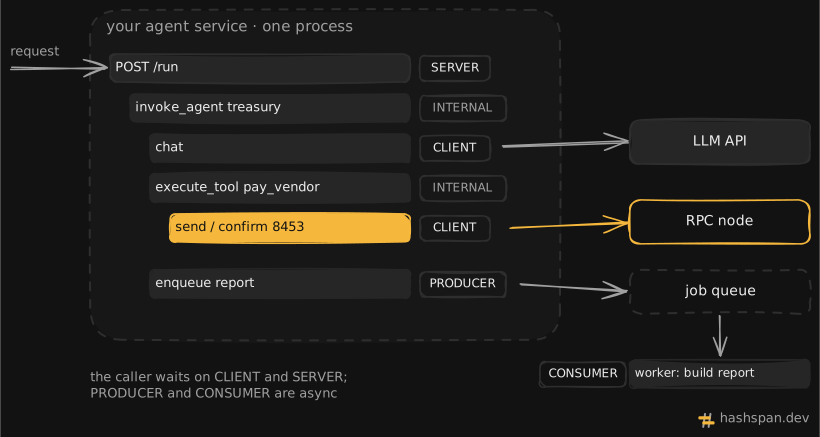
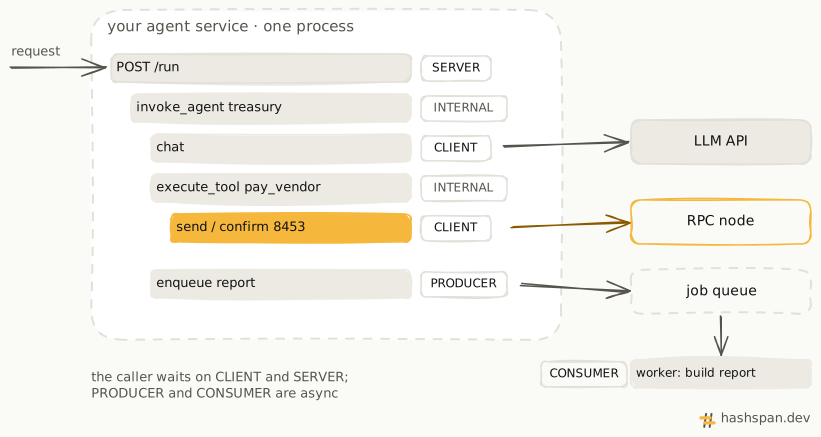
An agent’s trace mixes work done inside the process with calls out to other systems: an LLM API, an RPC node. Span kind is the one field that tells the two apart.
What are the five kinds?
| Kind | The span describes | Agent example |
|---|---|---|
CLIENT |
A request to a remote service; the caller waits for the response | An LLM API call, an RPC call |
SERVER |
Handling a remote request while the client waits | Your agent’s HTTP endpoint |
PRODUCER |
Starting or scheduling an operation | Putting a job on a queue |
CONSUMER |
Processing what a producer started | The worker that takes the job |
INTERNAL |
An operation inside the application | A tool call, an agent loop step |
The definitions are from the trace API spec. Kind is a hint to the backend about how to assemble the trace. A CLIENT span in one service and a SERVER span in another usually describe two ends of the same call.
What kinds does a real agent trace have?
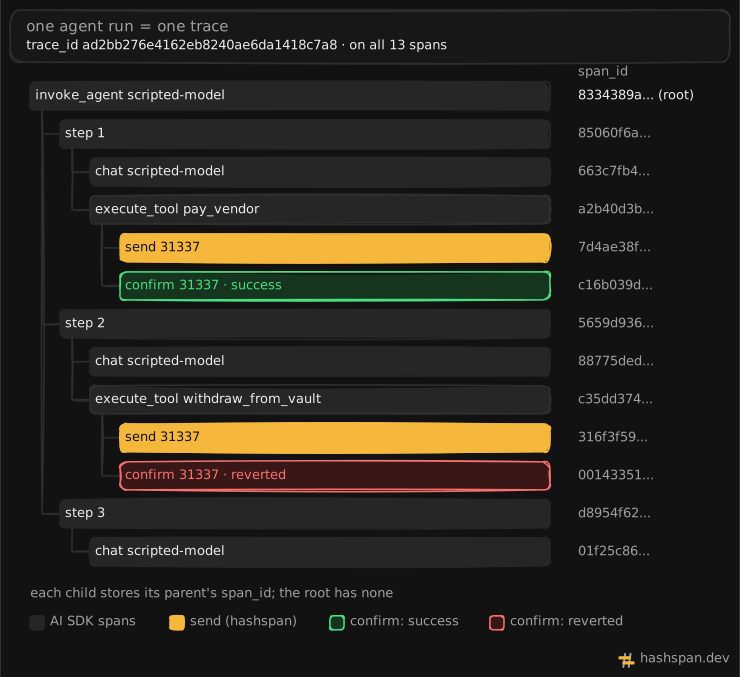
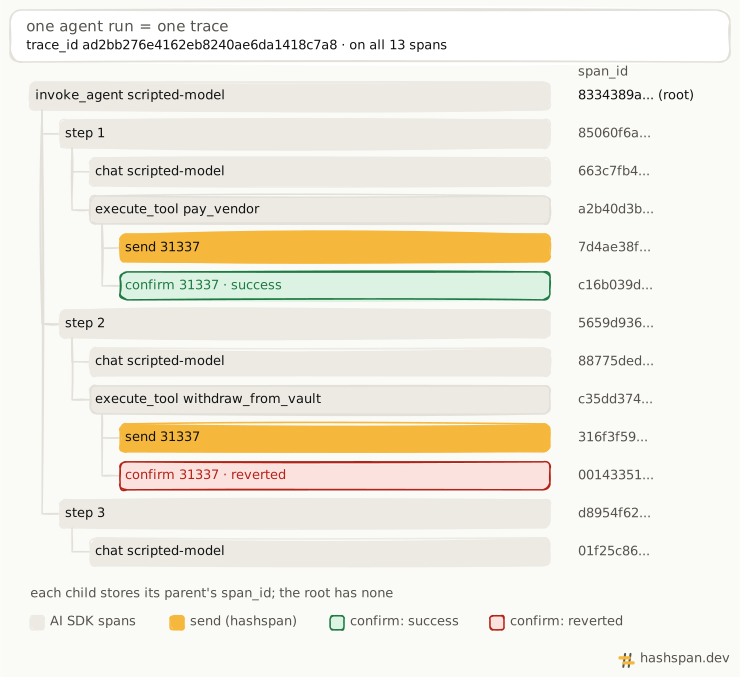
These are the kinds from a make demo run, as exported:
| Span | Kind | From |
|---|---|---|
invoke_agent |
INTERNAL |
AI SDK |
step 1 |
INTERNAL |
AI SDK |
chat |
CLIENT |
AI SDK |
execute_tool pay_vendor |
INTERNAL |
AI SDK |
send 31337 |
CLIENT |
hashspan |
confirm 31337 |
CLIENT |
hashspan |
The GenAI conventions allow both kinds for invoke_agent: CLIENT for a remote agent, INTERNAL for one running in the same process. The demo agent runs in-process.
How do I set it?
Pass it when you start the span. The API has no way to change it afterwards.
import { SpanKind } from '@opentelemetry/api';
tracer.startSpan('execute_tool pay_vendor').end(); // INTERNAL is the defaulttracer.startSpan('send 8453', { kind: SpanKind.CLIENT }).end(); // a call to an RPC node
for (const s of exporter.getFinishedSpans()) console.log(s.name, SpanKind[s.kind]);
execute_tool pay_vendor INTERNALsend 8453 CLIENTIn JavaScript SpanKind.CLIENT is 2, but the exported OTLP data in Jaeger says 3. OTLP reserves 0 for “unspecified”, so every value moves up by one.